Managed Identities in Azure: Enhancing Security Part 1
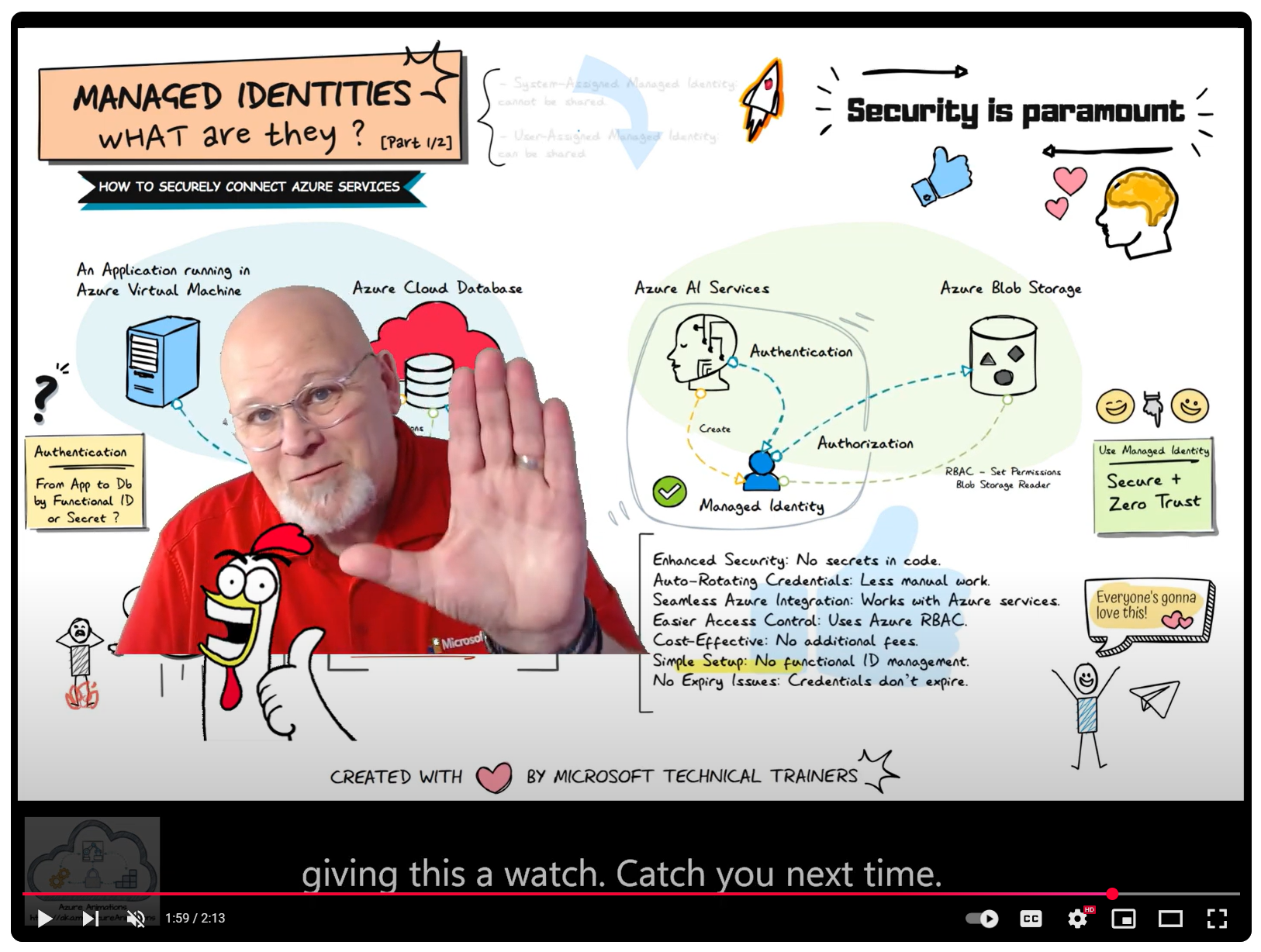
Click the video below for recorded explanations by Bob Reinsch.
Hands-on sample showing an Azure App Service using a Managed Identity to access Azure Storage (no secrets / connection strings):
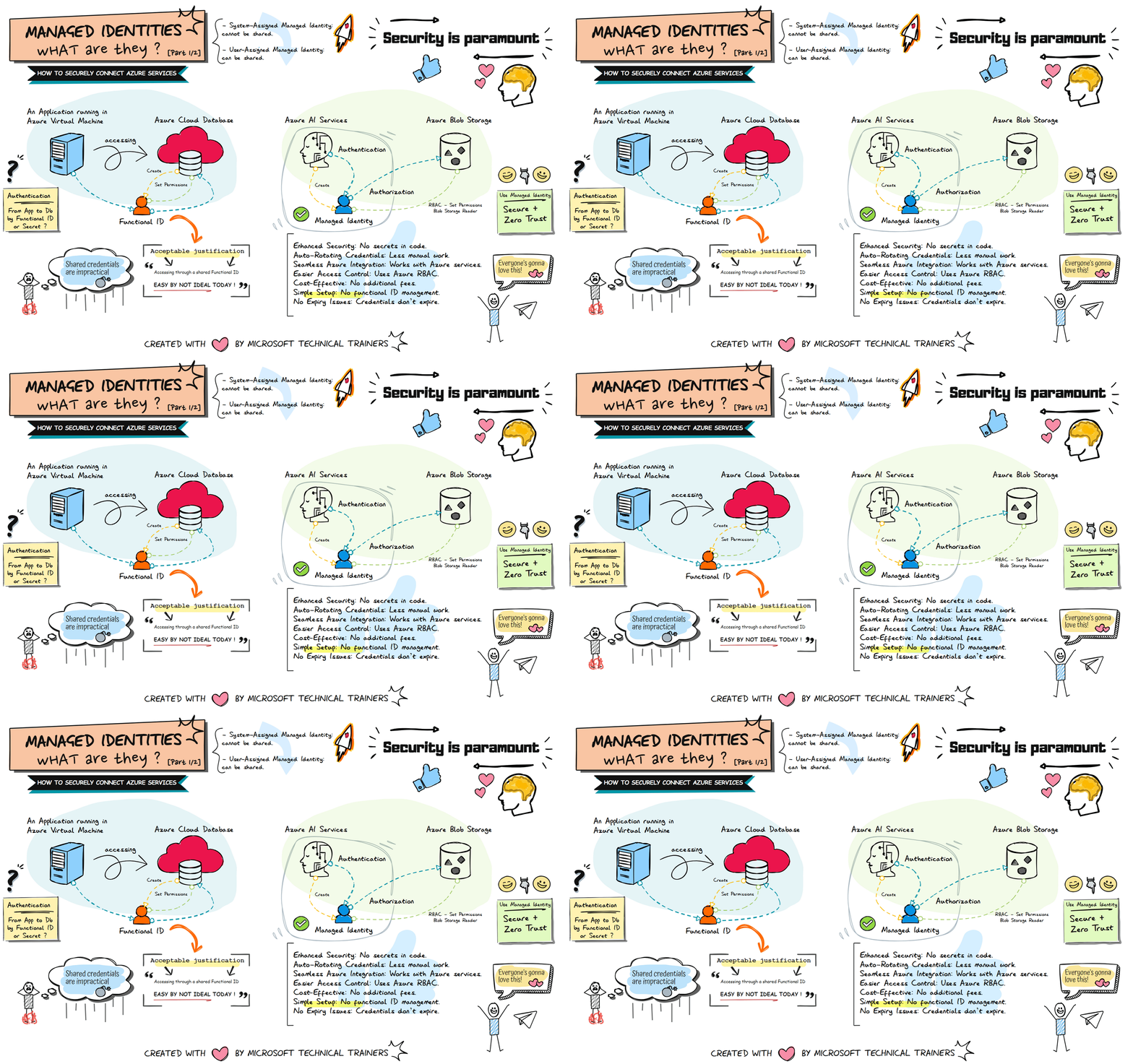
Above illustrates the process of using Managed Identities, comparing the traditional old-school way of using shared credentials to the modern approach of managed identities in Azure, highlighting enhanced security and simplified access management
-
Traditional Approach: Shared Secrets and Credentials 🔑
Using shared secrets or credentials to access Azure resources has several drawbacks:
- Security Risks: Potential exposure and misuse. ⚠️
- Maintenance Overhead: Regularly rotating secrets is cumbersome. 🔄
- Complexity: Securely distributing secrets adds complexity. 🧩
-
Modern Approach: Managed Identities in Azure 🌐
Managed identities provide a secure and streamlined way to access Azure resources without managing secrets.
-
Key Benefits 🌟
- No Secret Management: Reduces risk of exposure. 🚫🔑
- Simplified Access Control: Integrated with Azure Active Directory (AAD). 🔐
- Automatic Credential Management: Azure handles credential rotation. 🔄🔒
- Enhanced Security: Aligns with the principle of least privilege. 🛡️
-
Example Use Case 💡
Azure AI Services need to access Azure Blob Storage:
- Assigned a managed identity. 🆔
- Granted access (RBAC) to the Blob Storage. 🔐
- Authenticates and accesses data without managing credentials. 🔑
-
Conclusion 📈
Adopting managed identities enhances security, reduces overhead, and simplifies access management. This approach aligns with best practices for secure application development in Azure.