REST API and SDK
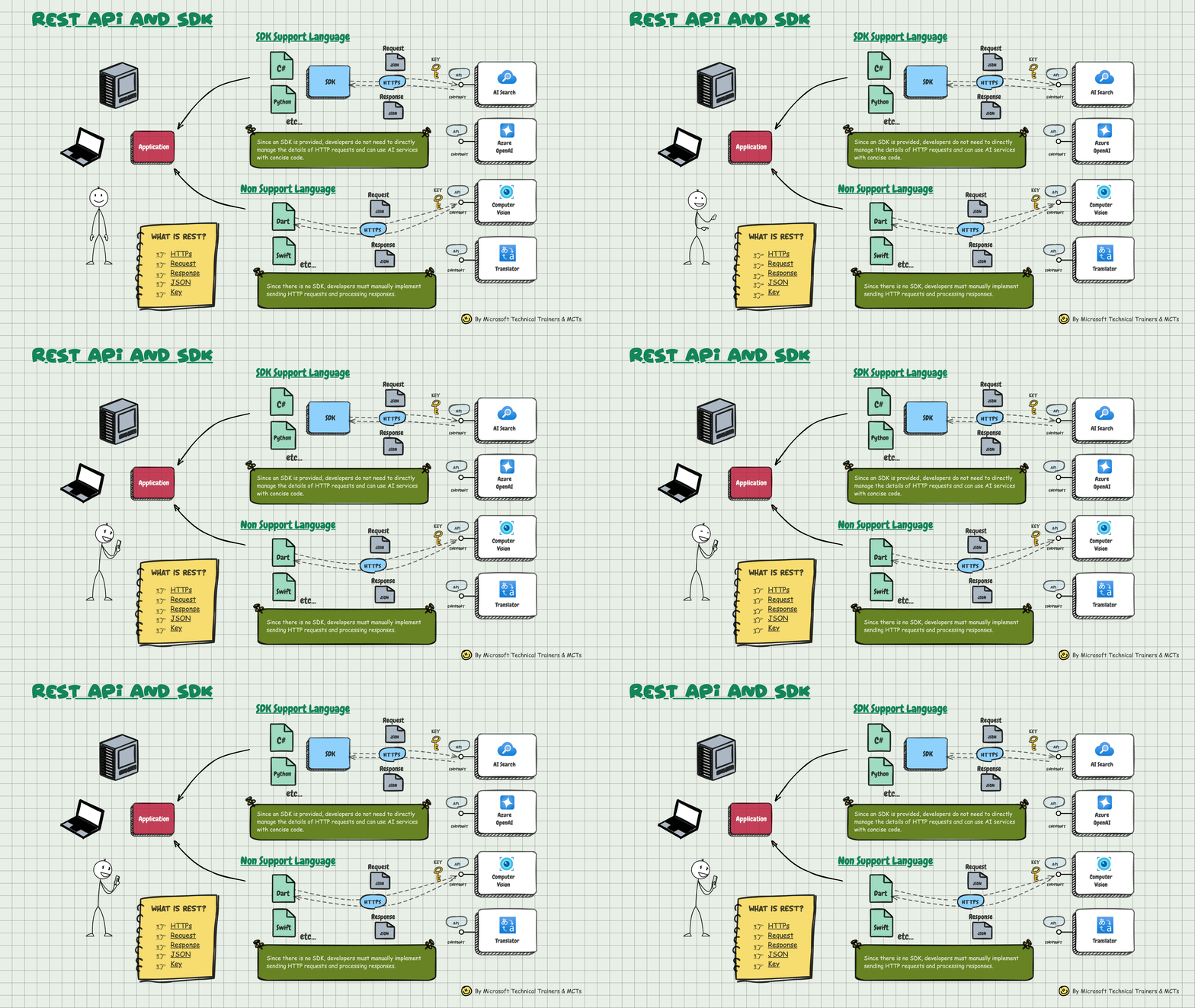
What is REST?
REST (Representational State Transfer) is an architectural style used for designing networked applications. It relies on HTTP requests to communicate between clients and servers.
Key Concepts of REST
- HTTPS: Secure communication protocol
- Request: A call made to the server
- Response: The data returned by the server
- JSON: A lightweight data format used for exchanging information
- Key: Authentication method for API access
Understanding SDK and REST API Usage
Azure provides different ways to integrate AI and cloud services into applications:
1 SDK Supported Languages
- Languages: C#, Python, and others
- SDK Usage:
- Developers can use pre-built SDKs, which simplify the process of making API calls
- SDKs handle HTTP requests and responses internally, allowing developers to interact with services using concise, high-level code
- Example Services:
- AI Search
- Azure OpenAI
2 Non-Supported SDK Languages
- Languages: Dart, Swift, and others
- Manual Implementation:
- Developers must send HTTPS requests manually, handling request formatting, authentication, and response parsing
- Example Services:
- Computer Vision
- Translator
Choosing the Right Approach
| Feature | SDK Supported Languages | Non-Supported SDK Languages |
|---|---|---|
| Ease of Use | Simplified API calls | Manual request handling |
| Performance | Optimized for efficiency | Requires more development effort |
| Flexibility | SDK handles authentication and requests | Full control over API implementation |
Conclusion
When working with Azure services, choosing SDK-supported languages can significantly reduce development time. However, for languages that lack SDK support, developers can still use REST APIs by manually implementing HTTP requests and responses.